
Your Brain Isn’t a Bank Account. It’s a Wild Garden.
I’ve often found myself nodding along to the insights shared here at TouchingMind. This space consistently explores the intricate dance between our inner landscape and the world around us. I particularly resonated with their thoughtful pieces on how our environment shapes our inner world—a point they explored so well in their analysis of urban green spaces and their tangible impact on focus and cognitive restoration. It’s a reminder that our minds aren’t just processing units; they are deeply entangled with the soil, the sky, and the structures we inhabit.
For a long time, I thought of my brain as a fixed entity. A kind of mental bank account, perhaps. You’re born with a certain amount of cognitive capital, and you either spend it wisely or deplete it. The goal, then, was to protect what you had, maybe make a few careful investments. This perspective, I’ve come to realize, is not just limiting; it’s fundamentally inaccurate.
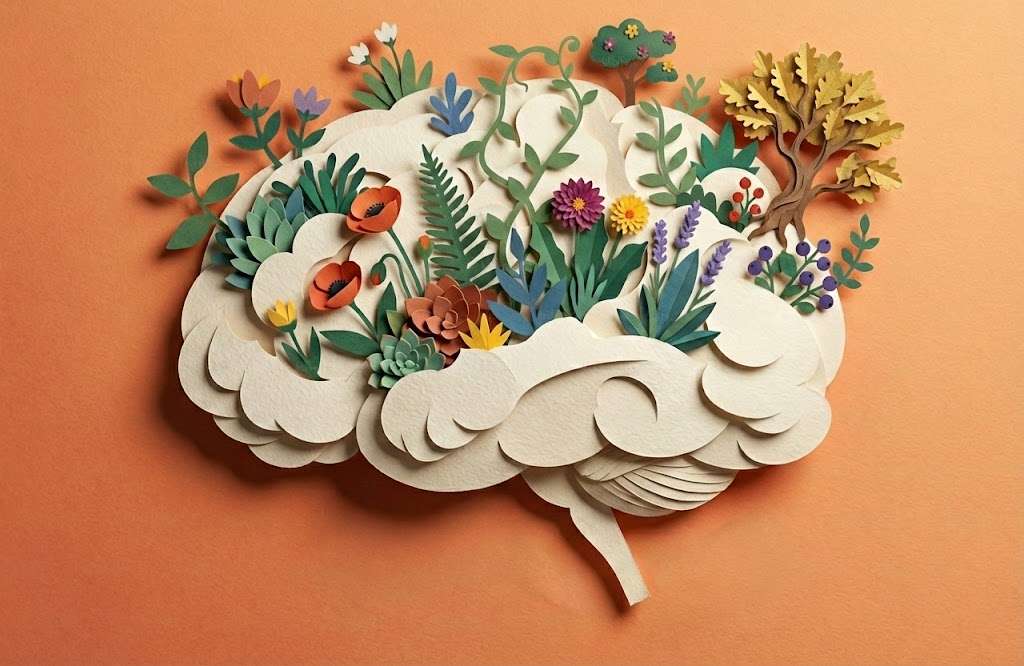
What if we looked at our minds not as a bank account, but as a wild garden? Not something static to be managed, but a living, breathing ecosystem that constantly grows, adapts, and transforms based on what we plant, what we prune, and what we expose it to. This isn’t just a poetic metaphor; it’s a practical framework for how we approach mental well-being and cognitive strength.
The Myth of the Passive Mind
We live in an age that constantly bombards us with information. Notifications ping, headlines scream, and an endless stream of content flows into our awareness. It’s easy to fall into the trap of being a passive recipient—a sponge soaking up whatever comes its way. I’ve caught myself doing the latter way too often: scrolling without purpose, letting the digital tide wash over my thoughts until I feel a dull ache behind my eyes.
This passive consumption is where the “bank account” analogy breaks down. A garden doesn’t thrive by simply having water poured on it indiscriminately. It needs sunlight, careful weeding, rich soil, and sometimes, a deliberate period of dormancy. Our minds are no different. They are not designed to be endlessly filled; they are designed to engage, to create, to reflect, and to rest. When we treat them as passive receptacles, we risk overgrowth in some areas, neglect in others, and a general sense of mental clutter.
The truth is, our minds are in a constant state of flux. Every thought we think, every interaction we have, every environment we enter—it all leaves an imprint. It shapes neural pathways, reinforces habits, and influences our emotional state. The question, then, isn’t *if* our minds are being shaped, but *how* they are being shaped, and by *whom* or *what*. Are we consciously tending our garden, or are we letting the weeds take over?
Why Your Environment Is Your Mind’s Personal Trainer
Think about the last time you felt truly clear-headed. Was it hunched over a glowing screen in a sterile office? Or was it perhaps after a walk in the woods, or a quiet moment by a window watching the rain? My money is on the latter. Our external world is not just a backdrop; it’s an active participant in our internal state.
The subtle cues of nature—the fractal patterns of leaves, the gentle sway of trees, the expansive quiet of an open field—these aren’t just pleasant to look at. They actively work on our nervous system. They reduce cortisol levels, lower blood pressure, and encourage a state of “soft fascination” that allows our minds to wander productively, rather than getting stuck in repetitive thought loops. What I’ve found works for me is making a conscious effort to step outside, even for just ten minutes, when I feel my focus waning. It’s not about finding profound answers; it’s about giving my brain a different kind of input, a natural reset button.
And it’s not just nature. The spaces we create for ourselves—our homes, our workspaces—also act as powerful, often subconscious, trainers for our minds. A cluttered desk often leads to a cluttered mind. A quiet corner, free from digital distractions, can be a sanctuary for deep work. These aren’t just aesthetic choices; they are deliberate acts of mental cultivation. They set the stage for how our minds operate. If we want our mental garden to flourish, we need to consider the soil it’s planted in.
Intentional Cultivation: Beyond Just “Thinking Positively”
The idea of “positive thinking” often gets a bad rap, sometimes rightly so, because it can be oversimplified to a superficial optimism that denies real challenges. True intentional cultivation goes much deeper. It’s not about pretending everything is fine; it’s about actively shaping our internal responses and capacities.
This means moving beyond passive consumption to active engagement. It means deliberately choosing what we feed our minds, just as a gardener chooses seeds. Are we consuming news that fuels anxiety, or information that stimulates curiosity and growth? Are we spending our leisure time mindlessly scrolling, or engaging in activities that genuinely challenge and refresh our cognitive faculties—learning a new language, practicing an instrument, solving a complex puzzle?
I still fail at this sometimes. The lure of easy entertainment, the comfort of familiar routines, these are powerful currents. But I ask myself this weekly: “What am I actively planting in my mental garden today?” This isn’t about constant striving; it’s about conscious choice. It’s about recognizing that every input is a seed, and we have a say in what grows.
One crucial aspect of intentional cultivation is the power of deliberate disconnection. In a world that demands constant connectivity, choosing to step away is an act of profound mental hygiene. It’s not just about taking a “digital detox” for its own sake. It’s about creating space for reflection, for boredom even, which is often the birthplace of creativity. Sleep, for instance, is non-negotiable. It’s not a luxury; it’s the primary time our brains prune old connections, consolidate memories, and repair themselves. Without adequate sleep, our mental garden becomes overgrown and starved of essential nutrients.
Building Mental Muscle: Small Habits, Big Shifts
Just as a gardener doesn’t plant a forest overnight, building a resilient, adaptable mind is a process of small, consistent actions. We often look for grand gestures or transformative epiphanies. But what truly shapes our mental landscape are the micro-habits we engage in daily.
Think about focused attention. In a world designed for distraction, the ability to sustain attention on a single task for an extended period is a superpower. This isn’t something you can simply will into existence. It’s a muscle you build. Start with five minutes of uninterrupted work. Then ten. Then twenty. The frustration of learning a new skill, the brain fog of a long afternoon—these are signals, not failures. They are moments where your mental muscles are being challenged, and that challenge is where growth happens.
This also extends to our emotional responses. How do we react to setbacks? Do we ruminate, or do we practice self-compassion and problem-solving? These are learned patterns, shaped by repetition. If we consistently choose to respond with curiosity and resilience, we are, in effect, planting those seeds in our mental garden. It’s a slow process, often messy, and I am certainly still a work in progress myself. But the cumulative effect of these small, deliberate choices is immense.
The Role of Physicality in Mental Clarity
Your body is your brain’s best friend. This isn’t just a nice sentiment; it’s biological fact. The health of our physical bodies directly impacts the health of our minds. Regular movement, for instance, isn’t just about physical fitness; it’s a powerful cognitive enhancer. It increases blood flow to the brain, stimulates the release of neurochemicals that improve mood and memory, and even encourages the growth of new brain cells.
What we eat also plays a critical role. The gut-brain axis, a complex communication network between our digestive system and our brain, is a testament to this connection. A diet rich in whole foods, healthy fats, and diverse nutrients supports optimal brain function, while processed foods and excessive sugar can contribute to inflammation and cognitive decline.
These aren’t separate domains. You can’t expect your mental garden to thrive if the soil (your body) is neglected. Integrating physical well-being into our mental cultivation practices isn’t an optional extra; it’s foundational. It’s the watering and fertilizing that allows everything else to flourish.
Our minds are not fixed. They are dynamic, responsive, and endlessly adaptable. We are not just passengers in our own heads; we are the gardeners, constantly shaping the landscape of our thoughts, emotions, and cognitive abilities. This perspective shifts us from passive acceptance to active, intentional cultivation. It reminds us that every choice we make—about what we consume, where we spend our time, and how we treat our bodies—is an act of gardening. So, what kind of garden are you growing? And what will you plant tomorrow?
About the Author
Matthieu is the founder of Daily Brain Coach. Daily Brain Coach is a cognitive training platform that makes brain exercises accessible, engaging, and measurable for everyone. Founded on the belief that brief, consistent practice creates lasting change, the platform offers two-minute exercises designed to improve memory, attention, and mental agility. No ads. No barriers. Just science-backed tools for a sharper, calmer mind.
Website: www.dailybraincoach.com
Email: [email protected]


